インド指定部族の社会移動への意識とその実践/タミル・ナードゥ州指定部族パニヤーンを事例に
対象とする問題の概要 これまでインド政府は貧困問題を解決するために様々な政策を実施してきた。その成果はある程度認められるものの、依然として多くの貧困層を抱えており、貧困削減はインド社会において重大な社会問題として位置づけられている。なかで…

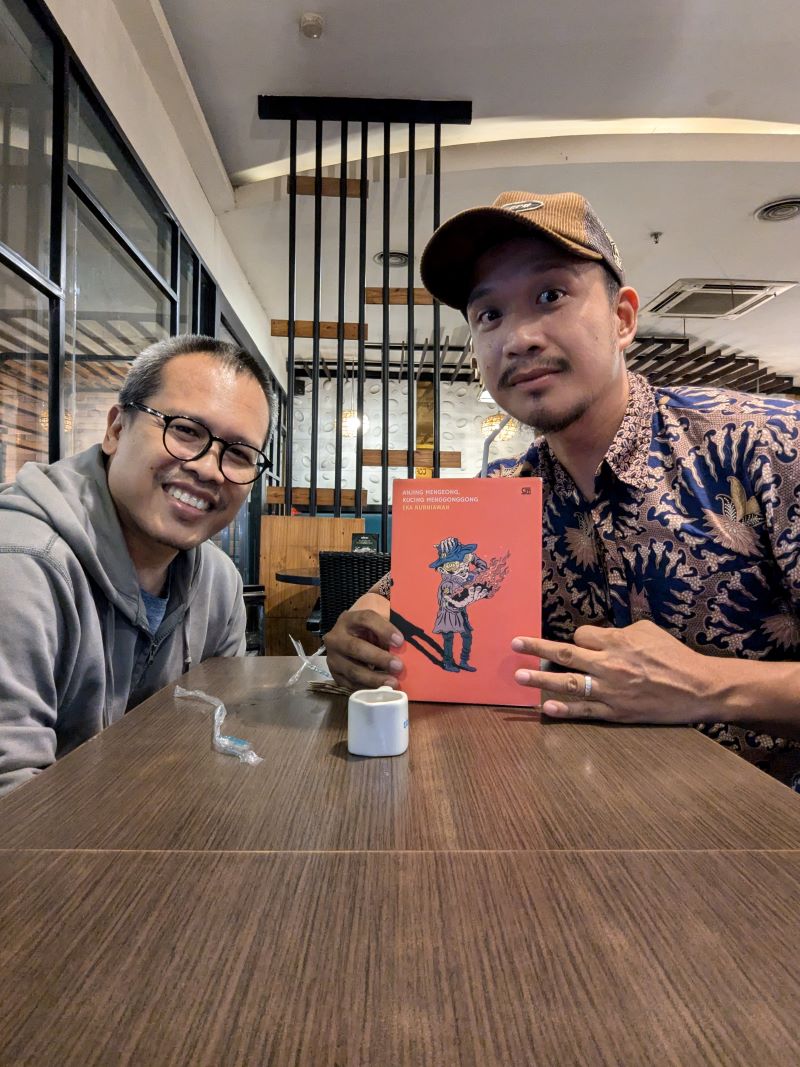
Photo 1. Post-interview photos with Eka Kurniawan. Taken in Grand Paragon, West Jakarta, on October 31, 2024.
Developed under the supervision of Professor Masaaki Okamoto, my doctoral research concerns itself with the political and intellectual interventions of the Congress for Cultural Freedom (CCF) in Indonesia and the Philippines during the Cold War through its funded cultural journals: Solidarity (Philippines) and Horison (Indonesia). Both coming out in 1966, the publication of Solidarity and Horison marked, in many ways, an important phase of the Cold War in Southeast Asia, a significant shift in the political alignments of Indonesian and Filipino intellectuals, and the quickening tensions between articulations of postwar nationalism and global anti-communist discourse in the region. By extensively analyzing the editorial history of both journals and the politics of their founding editors (F.Sionil Jose for Solidarity and Mochtar Lubis for Horison), the research aims to provide a comprehensive intellectual history of the Cultural Cold War in the region and analyze how both journals negotiated, translated, and articulated CCF’s anti-communist politics in its pages. Given that part of this research will deal with the legacies of these funded publications, interviews with former journal editors and contributors are crucial to the development of the dissertation’s latter chapters. Moreover, given that both journals were not the first examples of anti-communist publications during the early years of the Cold War, the need to take into account possible predecessors becomes incumbent to my research.
Although my current research covers two areas (Indonesia and the Philippines), this research trip focused on gathering primary and secondary data from a gamut of Indonesian sources. Thus, the aim(s) of this research trip can be further summarized through the following related activities and their corresponding relevance to the research: (1) accessing and creating scanned copies of “liberal” and “anti-communist” publications–such as Konfrontasi, Sastra, and Siasat–that preceded Horison in order to identify the incipient ferments of anti-communist discourse in Indonesian intellectual and literary circles before the events of 1965; (2) interviews with former Horison editors and contributors in order to gain insight on the workings of the journal and as a way to compare and distinguish between its various “editorial periods”; and (3) consult with Dr. Wildan Sena Utama in order to gain a deeper understanding and perspective on various transnational contexts that influnced the direction(s) of postwar Indonesian politics from 1950-1965.
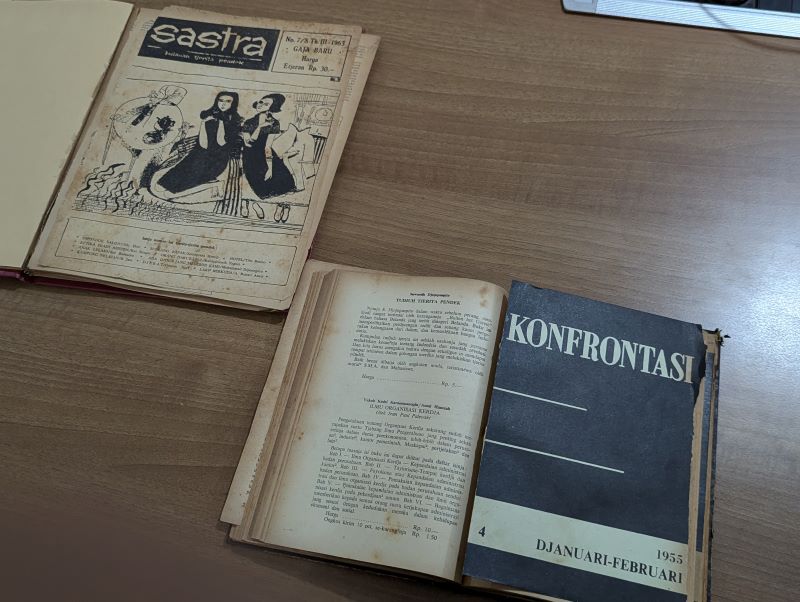
Photo 2. Copies of Konfrontasi and Sastra from the Perpustakaan Nasional Republik Indonesia
From a general perspective, this research trip helped me gain a firmer grasp on the various contexts that underpin the primary objects of my research. Specifically, having interviewed former editors of and contributors to Horison like Taufiq Ismail, Goenawan Mohamad, Yoseph Yapi Taum, Seno Ajidarma, Oka Rusmini, and Eka Kurniawan, among others, I was clued in to the idea of Horison having several distinct periods of existence, each one defined by a particular editorial orientation or direction. For instance, older editors like Taufiq Ismail tend to characterize the first two decades of the journal as its most critical (from a political standpoint), dynamic, and outward-looking. The said period also coincides with the time when the CCF was still funding the journal. On the other hand, younger editors and contributors like Eka Kurniawan tend to view the Horison they became part of as a publication catered to Indonesian readers (i.e. the introduction of “Anugerah Sastra Horison”) and less involved with political debates.
From a materials perspective, I was able to access and create scanned copies of all 48 issues of Konfrontasi, all 84 issues of Sastra, and 32 issues of Siasat. Of the three publications, the sheer volume of Siasat (a weekly publication with more than 500 issues) presented significant difficulties given the other priorities of the research trip. As mentioned in my proposal for the Explorer Program, taking stock of these publications will address several gaps in my literature review and understanding of pre-Horison cultural politics in Indonesia.
Aside from the obvious need to obtain more issues of Siasat, there is also a need to access other publications like Indonesia Raya and ancillary documents (letters, diary entries, records) from key individuals like Mochtar Lubis (in his Jakarta residence, which was turned into a library and museum) and H.B. Jassin (through the H.B. Jassin collection in Taman Ismail Marzuki). When it comes to interviews with former Horison editors and contributors, an interview with Fadli Zon, one of the last editors of the journal and Indonesia’s current Minister of Culture, will paint a clearer picture of Horison’s post-Cold War configuration. Finally, as suggested by Professor Okamoto, there is also a need to account for the involvement of religious groups (i.e., Islamic organizations, the Catholic Church) in the cultural polemic against communists. Acting on this suggestion, of course, involves gaining access to the publications of organizations like LESBUMI and Lembaga Kebudayaan Katolik Indonesia.
Copyright © 附属次世代型アジア・アフリカ教育研究センター All Rights Reserved.